








Does Whey Protein Work Better Than Creatine, or Is It the Other Way Around?
This is not the right question to begin with, and all the confusion about whey vs. creatine comes from regarding them as competitors trying to fill the same niche.
The main benefit of whey protein lies in the fact that it delivers a complete set of quickly-absorbed amino acids into your body, which are then used by the muscles to recover and grow following exercise. There simply is not going to be any muscle growth without sufficient levels of protein intake.
- Supplies all nine essential amino acids in an easily absorbed form
- Helps you hit daily protein targets that Indian vegetarian and mixed diets often fall short of
- Directly supports muscle repair, recovery, and lean mass retention
The creatine supplement does not have any direct effect on building the muscle tissues. Rather, creatine increases the availability of the phosphocreatine in your muscle tissues, which is used by your body for the production of the ATP, which is the energy source that gets depleted in short, intense workouts such as lifting.
- More strength and power output during training
- Slightly better performance in high-intensity, short-duration exercise
- Indirect support for muscle growth, because you can train harder and lift heavier over time
Why Is This Comparison the Top Fitness Question for Indians in 2026?
With many Indians going past the "protein shakes alone" phase to plan their training schedules, the debate on supplements has evolved. It is no longer just about whether "I need to take protein powder" but more about how "my stack should be."
- Whey Protein – a fast-absorbing recovery protein aimed at closing daily protein gaps and supporting muscle repair
- Creatine Monohydrate – the most researched performance supplement for strength, power, and training output
- Whey + Creatine Combos – a convenient stack format growing in popularity among people who don't want to manage two separate tubs and dosing schedules
Quick Comparison Table: Creatine vs. Whey Protein.
| Feature | Creatine Monohydrate | Whey Protein |
|---|---|---|
| Purpose | Boosts strength, power & high-intensity performance | Supplies amino acids for muscle repair & growth |
| Best For | Strength training, power lifts, sprint-style workouts | Closing daily protein gaps, post-workout recovery |
| Timing | Anytime during the day, consistency matters more than timing | Ideally post-workout or between meals |
| Daily Use | Yes - daily supplementation is standard practice. | Yes - used daily to meet protein targets |
| Beginner Suitability | Suitable, but best introduced once training is consistent | Highly beginner-friendly, foundational supplement |
| Nutrela Product | Creatine Monohydrate 100g | Whey Performance / Isoveda Whey Isolate |
What Are Creatine and Whey Protein Made Of? A Closer Look.
1- Creatine Monohydrate – The Strength & Power Compound.
Creatine is an organic compound that naturally occurs in small quantities in red meats and fish and is synthesized in your body by the liver, kidneys, and pancreas. Creatine supplementation results in higher levels of phosphocreatine in your muscle cells, resulting in increased energy supply for explosive actions.
A normal dosage of creatine monohydrate is usually about 3-5 grams daily. Unlike whey, creatine does not constitute a protein supplement; thus, it contributes nothing to your daily protein consumption.
Creatine supplementation is effective for building strength and power due to the fact that creatine positively affects the energy system used by muscles in the process of heavy lifting, which will allow you to do a couple of additional reps or lift a bit more load
2- Whey Protein – The Muscle Repair & Recovery Protein.
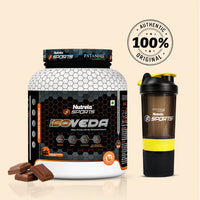
The whey protein is extracted from the milk during cheese manufacture process and has a high concentration of BCAA’s (branched chain amino acids). A serving of performance whey can provide about 24 grams of proteins in addition to essential amino acids needed for recovery.
Since the whey protein is rapidly digestible, it works well after workouts when the muscles become ready to uptake the nutrients for repair. The whey is a complete protein as it includes all the nine essential amino acids that the body cannot synthesize on its own
3- Whey Protein Isolate – For Those Who Want Whey Without the Bloat.
For those sensitive to lactose, whey protein isolate goes through additional filtration to remove most of the lactose and fat, delivering a leaner, higher-protein product (around 27g per serving) without the digestive discomfort some people experience with regular whey concentrate.
Creatine vs Whey Protein for Muscle Gain — Which Wins?
- In case you have little protein intake, whey protein will make more difference in gaining muscle.
- In case your protein intake is sufficient but you cannot progress any further, creatine is the choice.
- A combination of both will be best for a full muscle gain package.
Creatine vs Protein Powder for Strength Training.
This is where creatine has the clearest, most research-backed advantage. Creatine for strength is one of the most studied areas in sports nutrition, with consistent evidence showing improvements in one-rep max strength, power output, and performance in short, high-intensity efforts.
Whey Protein for Muscle Recovery — Where It Truly Shines.
Which One Should You Take First?
- If you're not meeting your daily protein needs → Start with whey protein first. Most beginners underestimate how much protein their diet is actually missing, and closing that gap has a bigger initial impact than any performance supplement.
- If your protein intake is already sufficient but your strength has plateaued → Add creatine. Once your diet supports recovery, creatine becomes the tool that helps you break through strength plateaus.
- If you're training seriously and consistently → Consider both. Whey covers your recovery and repair needs, while creatine supports the strength and power side of your training — together they cover both halves of the equation.
Can I Take Creatine and Whey Together?
Timing: When Should You Take Creatine and Whey Protein?
| Supplement | Best Timing | Notes |
|---|---|---|
| Creatine (before or after workout) |
Anytime during the day |
Consistency matters more than exact timing — daily use is what builds muscle creatine stores. over time |
| Whey Protein | Post-workout or between meals |
Ideal within 30-60 minutes after training, or anytime you need to close a protein gap |
| Stacking Both | Post-workout | Taking both together after a workout is a convenient way to cover recovery and performance in one step |
Is Creatine Good for Weight Loss?
This supplement does not serve for burning fats or losing weight, as it is not involved in metabolic pathways that affect fat loss. What this product may be used for is ensuring that a person maintains their strength even when they have to be in a calorie deficit, thus supporting muscle mass maintenance when people lose weight.
Supplement Stack for Muscle Gain — Where Do You Start?
- If muscle gain and strength are your main goals → Start with Whey Performance + Creatine Monohydrate as your core stack.
- If you're lactose-sensitive or get bloated easily, choose IsoVeda Whey Isolate + Creatine Monohydrate instead.
- If you want simplicity over managing two products, a Whey + Creatine Combo covers both needs in a single formula.
- If you're a complete beginner, start with whey protein alone for 3-4 weeks to build the habit, then introduce creatine once your training becomes consistent. \
Consistency matters more than the exact combination you choose — pick a stack that fits your budget, digestion, and training schedule so you can stick with it long enough to see real results.
Safety First: Who Should Be Cautious With Creatine or Whey Protein?
Creatine and whey protein are both safe for the majority of adults who do not have any pre-existing health condition when consumed according to instructions. However, there are some groups that should seek approval from a physician before consuming creatine and/or whey protein:
Any existing kidney or liver diseases – Both creatine and high amounts of protein are processed through kidneys and livers; if one has any disease in these organs, he or she should consult a doctor prior to supplementing.
Pregnancy or lactation – There is no research regarding the consumption of creatine during this period; therefore, consultation is advised prior to taking the supplement.
-
Age under 18 – Teenagers should follow instructions from doctors or sports nutritionists about supplementation, especially concerning proteins.
-
Taking medications – Individuals who take regular medications, including those for kidneys, liver, and high blood pressure, should ask about any possible interaction with supplements.
-
Combining creatine with caffeine or stimulants – It is quite safe for everyone, except for
those who are sensitive to these substances; in such cases, one should monitor how the body reacts and regulate the dose accordingly.
When in doubt, start with a lower dose, monitor how your body responds, and consult a healthcare professional if you have any pre-existing condition.
Shop the Nutrela Creatine & Whey Range.
1- Creatine Monohydrate 100g - for Strength, Power, and High Intensity Training Support URL.
2- Whey Performance 1KG / 2KG - For Muscle Recovery and Protein Requirements URL.
3- IsoVeda Whey Isolate - For Low Lactose and Ultra-Pure Protein URL.
4- Whey & Creatine Stack – Easy One-Stack Solution URL.
Nutrela Product for Your Specific Goal.
| Your Goal | Recommended Type | Nutrela Product Match |
|---|---|---|
| Strength & power training | Creatine Monohydrate | Creatine Monohydrate 100g |
| Muscle gain & recovery | Whey protein | Whey Performance |
| Low-lactose muscle recovery | Whey isolate | IsoVeda Whey Isolate |
| Simple all-in-one stack | Whey and Creatine combo | Whey + Creatine Combo |
| Beginners easing into supplementation | Whey protein first, creatine later |
Whey Performance → then Creatine Monohydrate |
Frequently Asked Questions.
Should beginners take creatine or whey first?
Beginners are usually better off starting with whey protein, since most people fall short of their daily protein needs before they even reach a strength plateau that creatine would help solve. Creativeness is consistent.
Can I take whey protein and creatine together?
Yes. They work through different mechanisms and don't interfere with each other. Many people take both together post-workout for convenience or use a combined whey and creatine product.
Is creatine a protein powder?
No. Creatine is a performance compound that supports energy regeneration in muscles, not a protein source. It doesn't provide the amino acids your body needs for muscle repair the way whey protein does.
Does whey build muscle faster than creatine?
Whey protein directly supplies the amino acids needed for muscle repair, while creatine works indirectly by improving strength and training capacity. Used together with consistent training, they complement each other rather than one being definitively "faster."


