



Are you confused about whether to go for a plant protein or whey protein based on your fitness goals? Are you starting your workout program but are unsure which protein supplement is good for your body and fitness goals?
You are not the only one facing such confusion. With gym trainers advocating whey proteins while wellness influencers endorse plant protein and so many contradicting views on the internet, the majority of Indians end up choosing an incorrect product or abstaining from taking any protein supplements at all. It is obvious that you have come across the information that whey helps in muscle building faster while plant protein is "healthier" and easier to digest.
This is precisely why the debate between plant protein and whey protein has become one of the most sought-after topics of fitness in India by 2026.
Whey protein wins when it comes to quick post-workout recovery and the presence of leucine, which stimulates efficient muscle protein synthesis. Plant protein is the way to go for vegetarians, those who are lactose intolerant, or anyone wanting a more environmentally friendly protein source. Whey protein isolate is in the middle; it's lactose-free but provides all the fast-acting benefits of whey. This guide will explain the details in the coming paragraphs.
Most of the time, individuals who workout regularly opt for whey protein due to its long-time use as a standard in the industry, but just because it’s always used does not mean it is the best option for everyone. Both proteins are effective; it is just the matter of how each works for individuals.
Whey protein functions through providing a rapidly digestible source of a full range of amino acids, especially leucine, which is the amino acid directly responsible for muscle protein synthesis, this means -
- Quicker absorption, ideal for the post-workout recovery window
- Higher leucine content per serving compared to most plant sources
- A well-researched track record for muscle gain and strength training
Plant proteins are quite different because the body receives a slow release of amino acids and, in the case of an amalgamation of sources (pea + brown rice, for example), a truly balanced composition of amino acids. This is because:
- Ease of digestion for those who are intolerant to dairy or lactose
- Not reliant on ingredients that come from dairy — vegan and vegetarian-friendly
- More environmentally friendly manufacturing process than whey derived from dairy products
Neither one is better overall — it really comes down to which one meets your needs best. This is precisely what the remainder of this guide aims to determine.
Why Is This Comparison the Top Fitness Question for Indians in 2026?
As more Indians start creating their own home gyms, become vegetarian or Jain, or simply start reading labels, the choice between plant protein vs. whey protein becomes one of the most practical choices in the fitness nutrition field – for obvious reasons.
Unlike a decade ago, when whey was the only serious option on the shelf, today's Indian consumer has real, high-quality alternatives:
- Whey Protein – works as a fast-absorbing recovery protein, ideal for those focused purely on muscle gain and strength
- Whey Protein Isolate – a lower-lactose, higher-purity version of whey, delivering whey protein isolate vs. plant protein performance benefits with less digestive load
- Plant Protein – a complete plant protein for vegetarians' solution, built from pea, brown rice, and sometimes soy, that fits naturally into Indian dietary patterns
Instead of taking the one-size-fits-all approach of believing that one protein works for everything, knowing how each one works when it comes to muscle building, digestion, and weight loss means that you can actually find your supplement to yourself.
What are the Ingredients of Whey & Plant-Based Proteins – Detailed Description
To understand which protein suits you, it helps to know what's actually inside each type — beyond the marketing claims on the tub.
1. Whey Protein – Fast-Absorbing Dairy-Based Protein
Whey protein is an outcome of cheese production; it is obtained from milk. This particular protein is naturally high in BCAAs (branched-chain amino acids) such as leucine, isoleucine, and valine, which are most commonly known for muscle recovery and growth. One serving of performance whey typically provides 24g of protein, along with BCAAs, glutamine, and bone and joint health-related compounds such as Hadjod extract.
The reason why whey protein works well in building muscles is that it is a complete protein source, which means that it contains all nine essential amino acids in an optimal ratio, as well as the fact that it is easily digested by the body. The post-workout period (30-60 minutes) is considered to be the most effective for muscle development and growth due to increased muscle sensitivity.
2. Whey Protein Isolate – The Low-Lactose Performance Option
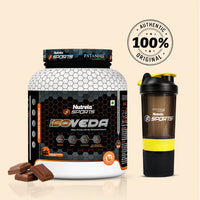
The whey isolate formula has one more step in which there is filtration in order to eliminate the presence of lactose and fat in whey. Therefore, a product with a higher concentration of protein is obtained. There will be about 27g of protein in each serving of the formula. There will be a minimal amount of carbohydrate in the product.
3. Plant Protein – Vegetarian-Friendly, Naturally Lactose-Free
Plant protein for vegetarians: sources of protein usually combine different plant sources, such as pea protein and brown rice protein, with possible inclusion of soy protein isolate to make an even better composition of amino acids compared to one individual plant protein source. The pea protein is abundant with BCAAs and iron; at the same time, brown rice protein contains methionine, which is deficient in pea protein. Thus, these two plants together form a balanced product, which is a lactose-free protein powder without any dairy or gluten.
Also, being naturally low on cholesterol and saturated fats, plant proteins become great choices for people who care about the cardiovascular system in addition to their fitness because these proteins will not elevate your cholesterol level.
Plant protein for vegetarians typically combines two or more plant sources — commonly pea protein and brown rice protein, sometimes with soy protein isolate — to create a more complete amino acid profile than any single plant source could offer alone. Pea protein is naturally rich in BCAAs and iron, while brown rice protein adds methionine, an amino acid pea protein is naturally lower in. Together, they create a well-rounded, lactose-free protein powder that's naturally free from dairy and gluten.
Plant-based proteins are also naturally lower in cholesterol and saturated fats than whey, making them good options for those who want to watch out for their heart health along with working towards becoming fit since it will not increase your cholesterol levels as some dairy proteins may do.
How These Work Together (or Separately) in a Routine
Instead of looking at whey and plant protein as being in opposition to each other in their effectiveness and performance, it is better to view them as tools that are used for specific reasons. Whey and whey isolate proteins are meant for rapid digestion and effective building of muscles, while plant protein is meant for proper digestibility and consistency with one’s diet.
Many people actually combine whey and plant proteins together.
Plant Protein vs. Whey Protein for Muscle Gain — Which Wins?
When muscle building is the main objective, here is when the debate really heats up and the science provides a relatively clear-cut answer, with some exceptions.
Whey protein for muscle gain has a strong advantage in two areas: leucine content and absorption speed. Since muscle protein synthesis is triggered more efficiently when leucine levels spike quickly after a workout, whey's fast digestion makes it a slightly more efficient post-workout choice, gram for gram.
That said, plant protein vs. whey for muscle gain isn't a total mismatch. Studies on blended plant proteins (pea + rice) have shown they can support similar strength and muscle gains as whey when:
- Overall daily protein intake is sufficient (not just post-workout timing).
- The plant protein blend provides a complete amino acid profile
- Total training volume and consistency remain the deciding factors, more than the protein source itself
If you want the fastest, most research-backed option purely for muscle gain, whey protein (or whey isolate for less bloating) edges ahead. But if you're vegetarian or prefer plant-based nutrition, a quality blended plant protein can still get you there — it just may require slightly more attention to total daily protein intake.
Whey Protein vs. Plant Protein for Weight Loss
Whey protein vs. plant protein for weight loss is a slightly different comparison, since weight loss depends more on overall calorie balance, satiety, and consistency than on the specific protein source.
That said, there are some practical differences worth knowing:
- Whey protein tends to have a strong satiety effect and is fast-absorbing, making it useful in a calorie-controlled diet, especially post-workout
- Plant protein often comes with added fiber (from pea or rice sources), which can support fullness over a longer period, useful for those trying to avoid snacking between meals
- Meal-replacement formats (like a protein shake used to replace a meal) can support weight management goals regardless of whether the protein source is whey-based or plant-based, since the calorie control and nutrient balance matter more than the source
For those specifically looking for weight-management support, products designed as meal replacements — combining protein with fiber, vitamins, and minerals — like Slim Choice, can be used with either a whey-based or plant-based approach, depending on personal dietary preference.
Best Protein Powder for Beginners in India - Where Do You Start?
If you're new to protein supplementation, the sheer number of options can be overwhelming. Here's a simple way to think about the best protein powder for beginners in the India search that most people run into:
- If you eat dairy comfortably and want fast results, start with a basic whey protein concentrate; it's usually more affordable than isolate and works well for general fitness goals.
- If you're vegetarian, vegan, or avoid dairy, start with a plant protein blend (pea + rice); it's gentle on digestion and fits naturally into most Indian vegetarian diets.
- If you get bloated or gassy with regular whey, start with whey isolate instead of switching to plant protein entirely — isolate often resolves the digestive issue while keeping whey's performance benefits.
- If your main goal is weight management, not muscle building, consider a meal-replacement shake rather than a straight protein powder, since it's formulated for calorie control rather than muscle-building macros
As a beginner, consistency matters far more than which specific protein you choose — pick the one that fits your diet and digestion, and you're far more likely to stick with it long enough to see results.
Plant Protein for Vegetarians: Why It's Especially Relevant in India
India has one of the largest vegetarian populations in the world, and this makes plant protein for vegetarians a particularly relevant topic — not a niche one.
Traditional Indian vegetarian diets already lean on protein sources like dal (lentils), soy (in the form of tofu or soy chunks), and to a lesser extent, rice and wheat. However, these sources individually often fall short of being "complete" proteins — meaning they don't contain all nine essential amino acids in ideal ratios. For example,
- Dal (lentils) rich in protein but relatively low in methionine
- Soy – one of the few plant sources considered a complete protein on its own, but not always practical to eat in large daily quantities
-
Pea protein – good in BCAAs and iron, but can be lower in methionine rice
protein – complements pea protein well, filling in the amino acid gaps pea protein leaves behind
This is exactly why a well-formulated plant protein blend — combining pea, rice, and sometimes soy — makes practical sense for Indian vegetarians. Rather than relying on dal and rice alone to meet daily protein targets (which often requires eating large portions), a plant protein shake offers a concentrated, convenient way to close the gap, especially for those with active lifestyles or fitness goals.
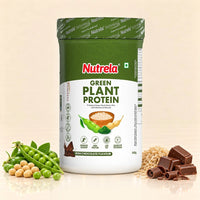
For daily vegetarian nutrition beyond pure muscle-building goals, a product like Nutrela Green Plant Protein — built on pea and brown rice protein — is designed specifically to support this kind of everyday supplementation without requiring any dairy or animal-derived ingredients.
Digestion, Lactose & Bloating: What You Should Know Before Choosing
Digestive comfort is one of the most overlooked factors in the plant protein vs whey debate — and often the deciding one for people who've tried whey and given up on it.
Why Whey Can Cause Bloating
Regular whey protein (whey concentrate) contains lactose, a milk sugar that a significant portion of Indians struggle to digest due to lactose intolerance, which is more common in South Asian populations than in Western ones. When lactose isn't broken down properly, it can cause bloating, gas, and stomach discomfort — often mistaken for a "protein allergy" when it's actually a lactose issue.
Why Isolate vs Concentrate — Does It Solve the Problem?
Whey protein isolate vs plant protein isn't really an either/or question when lactose is the concern — whey isolate goes through extra filtration that removes most of the lactose, which is why many people who feel bloated on regular whey have no issue at all with isolate. If you specifically enjoy whey's fast absorption and taste but struggle with lactose, isolate is often a better first step than switching to plant protein entirely.
Can Lactose-Intolerant People Take Whey?
Strictly speaking, lactose-intolerant individuals can often tolerate whey isolate reasonably well, since the lactose content is minimal after filtration. However, those with more severe intolerance, a milk protein allergy, or who prefer to avoid dairy altogether for ethical or dietary reasons will find a lactose-free protein powder made from plant sources to be the more comfortable.
worry-free option.
Digestive Enzymes and Gut Comfort
Some formulations — both whey and plant-based — now include digestive enzyme blends specifically to reduce bloating and improve nutrient absorption. If digestive comfort is a priority
regardless of which protein type you choose, checking for added digestive enzymes on the label is a practical step.
Protein Powder Without Side Effects: What to Actually Check
Searching for a protein powder without side effects usually means checking for a few specific red flags, rather than assuming one protein type is universally "safer" than the other:
No additional sugar - Too much sugar can lead to indigestion.
Clear labeling - Clear listing of the source of protein, amino acid content, and additives
Free from harmful additives and artificial colors - Less chances of having side effects from an ingredient list that is clean
Appropriate serving - Too much protein in general can upset the digestion, whether it is plant or whey based protein; the body only requires a certain amount of protein.
Certifications - Licenses such as those by the Food Safety and Standards Authority of India and lab-testing for quality and purity is always a good indicator of the safety and manufacturing of a particular product.
Both plant and whey protein can be consumed without any side effects if the formulation is good and the dosage recommended is followed — the side effects claimed are related to either lactose intolerance, too much sugar, or excess consumption.
Sustainable Protein Powder India: A Balanced Look
The concept of sustainability has become increasingly relevant in the protein discussion, but we should handle it more realistically than dramatically.
Plant protein generally has a lower environmental footprint in terms of land and water use per gram of protein produced, compared to dairy-based whey, since it skips the resource-intensive process of dairy farming. This is one reason sustainable protein powder India searches have grown alongside general interest in plant-based nutrition.
That said, this doesn't mean whey protein is an unsustainable or poor choice — whey is actually a by-product of cheese production, meaning it makes use of a resource that would otherwise go to waste in the dairy industry. For many Indian households where dairy is already a dietary staple, whey remains a practical, effective, and reasonably sustainable protein source in its own right.
The honest takeaway: if sustainability is a genuine priority for you alongside your fitness goals, plant protein is the slightly better-aligned choice. But if you already consume dairy regularly and
prioritize training performance, which remains a perfectly reasonable option — sustainability shouldn't be the sole factor if it doesn't reflect your broader lifestyle or dietary choices.
Can You Mix Plant Protein and Whey Protein Together?
This is a common question for people who don't want to fully commit to one protein type — and the answer is straightforward: yes, generally, you can combine both as part of the same routine, just not necessarily in the same shake every time.
Many fitness-focused individuals use a simple day-based or timing-based approach:
- Whey or whey isolate post-workout – for the fast-absorbing recovery benefit right after training
- Plant protein on rest days or with meals – for a gentler, fiber-supported option that fits well with regular food
- Whey isolate when eating out or on busy days – for convenience and low lactose load
- Plant protein in the evening – some prefer it before bed since it digests more gradually
There's no strict rule requiring one protein type exclusively — as long as your total daily protein intake matches your goals, combining both based on convenience, training schedule, and digestion is a completely reasonable approach. Just avoid unnecessarily doubling up on protein in a single day beyond what your body actually needs.
Best Nutrela Protein for Your Specific Goal
Rather than asking "which protein is best" in general, it helps to match the product to your specific goal:
| Your Goal | Recommended Type | Nutrela Product Match |
|---|---|---|
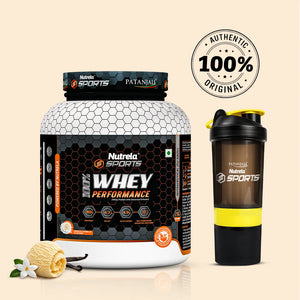
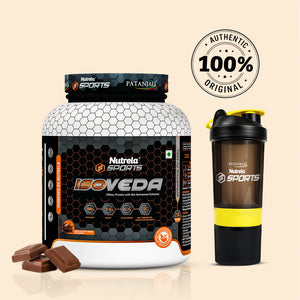
| Muscle gain, strength training | Whey protein / Whey isolate | Whey Performance or IsoVeda Whey Isolate |
| Lean muscle with low lactose tolerance | Whey isolate | IsoVeda Whey Isolate |
| Vegetarian daily nutrition | Plant protein (pea + rice) | Green Plant Protein |
| Weight loss / meal replacement support | Whey or plant-based, depending on diet | Slim Choice (paired with whey or plant protein as preferred) |
| Seniors / general daily wellness | Plant protein or targeted nutrition, depending on diet | Green Plant Protein or a relevant daily nutrition product |
Quick Comparison Table: Plant Protein vs Whey Protein
| Feature | Whey Protein / Isolate | Plant Protein |
|---|---|---|
| Protein Quality | Complete protein, high leucine content | Complete when blended (pea + rice); slightly lower leucine |
| Amino Acid Profile | All 9 essential amino acids, BCAA-rich | Complete in blends; individual sources may lack specific amino acids |
| Digestion | Fast-absorbing, ideal post-workout | Slower, more gradual release; gentler on sensitive stomachs |
| Lactose Content | Present in concentrate; minimal in isolate | None — naturally lactose-free |
| Cholesterol & Saturated Fat | Present, as it's dairy-derived | Naturally lower — a plus for heart health |
| Immune Support | Contains immunoglobulins for modest immune benefit | Not a natural source of immunoglobulins |
| Taste & Mixability | Generally smoother, easier to mix | Can be slightly grainier depending on formulation |
| Sustainability | Dairy by-product; moderate footprint | Generally lower environmental footprint |
| Best Suited User | Muscle-focused, dairy-tolerant individuals | Vegetarians, lactose-sensitive, sustainability-focused users |
| Nutrela Product Match | Whey Performance / IsoVeda Whey Isolate | Green Plant Protein |
Frequently Asked Questions
1. Is plant protein better than whey protein?
Neither is universally "better"—it depends on your goal. Whey is generally more efficient for fast muscle protein synthesis due to its leucine content and quick absorption, while plant protein is better suited for vegetarians, those with lactose sensitivity, and those prioritizing sustainability and lower cholesterol intake.
2. Which protein is better for muscle gain?
Whey protein has a slight edge for muscle gain due to its fast absorption and high leucine content, which triggers muscle protein synthesis efficiently. However, a well-formulated blended plant protein can still support solid muscle gains if total daily protein intake is sufficient.
3. Which protein is better for weight loss?
Both can support weight loss when used as part of a calorie-controlled diet. Whey offers strong satiety and fast absorption, while plant protein often comes with added fibre for longer-lasting fullness. Meal-replacement formats can work with either protein source depending on your diet.
4. Is whey protein vegetarian?
Whey protein is derived from milk, making it vegetarian (lacto-vegetarian) but not vegan. It's suitable for most Indian vegetarian diets that include dairy, but not for those following a strict vegan or dairy-free lifestyle.
5. Is plant protein a complete protein?
A single plant protein source (like pea or rice alone) may not be a complete protein on its own. However, when combined — such as pea protein blended with brown rice protein — the mix typically provides all nine essential amino acids, making it a complete protein.
6. Which protein is easier to digest?
This depends on individual tolerance. Plant protein is naturally lactose-free and tends to be gentler for those with dairy sensitivity. Whey isolate, due to reduced lactose content, is also easier to digest than regular whey concentrate for most people.
7. Is whey isolate better than regular whey?
Whey isolate has a higher protein concentration and significantly lower lactose and fat content compared to regular whey concentrate, making it a better option for those who experience bloating with regular whey or want a leaner protein profile.
8. Can lactose-intolerant people take whey?
Many lactose-intolerant individuals tolerate whey isolate reasonably well due to its minimal lactose content after filtration. However, those with more severe intolerance or a preference to avoid dairy entirely may find a plant-based protein more comfortable.
9. Can I take plant protein every day?
Yes, plant protein is generally suitable for daily use as part of a balanced diet, following the recommended serving size on the label. It's a convenient way for vegetarians to consistently meet daily protein needs.
10. Which Nutrela protein should I choose?
It depends on your goal: choose Whey Performance or IsoVeda Whey Isolate for muscle gain and strength training, Green Plant Protein for vegetarian daily nutrition, or Slim Choice alongside your preferred protein type if weight management is your primary goal.


